
TL;DR
The journey of Adrette Window Coverings’ clients starts with a complimentary Design Discovery Call. Then comes the in-home consultation, where Marlys sees your home's actual light, architecture, and proportions. By visiting your home, she can see details no photo can replicate.
Ideally, custom window treatments should be planned during construction or remodeling, so reinforcements and motorization wiring can be built in while walls are still open.
Adrette's signature process is known for its personalized experience and white-glove service. Most blinds and shades are ready in 4–6 weeks; custom drapery, Roman shades, and bedding take roughly 10–14 weeks, depending on fabric availability.
A recently completed 1920s Portland bungalow project shows how the right shades, drapery, and hardware turned "cold and unfinished" rooms into a warm, elegant home.
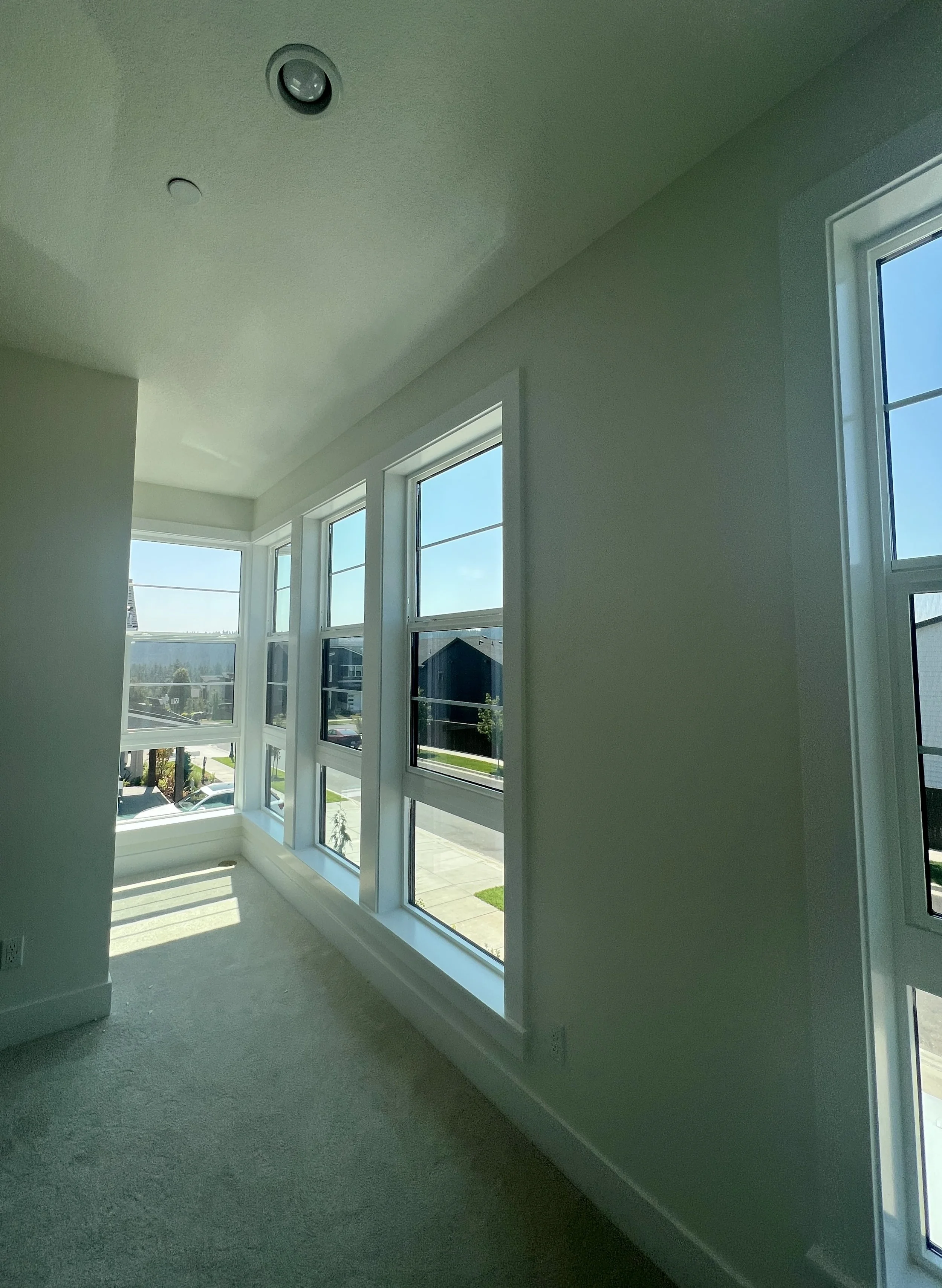
A “before” shot of Nicole’s guestroom windows without shades.
Picture the windows in your home right now. Maybe they're left bare since you moved in, or covered with curtains that were "close enough" when you ordered them online.
One way or another, they were a compromise, a placeholder for a future day when you could really do something special with your windows. You've scrolled hundreds of inspiration photos, and yet, nothing has changed.
If you’re stalled on a window treatment project, you’re not alone. It doesn’t take long to realize that they are far more complicated than it seems. There are so many options, and getting things to look the way you want requires technical knowledge about the materials involved and the right ways to install them. Ultimately, the best way to break the inertia is to have an outside eye visit your home and help you bring the draperies of your dreams to life.
The in-home custom window treatment consultation is designed to help you get “unstuck” by having someone else see what you’ve been thinking about, in your actual surroundings, and help you understand what’s possible.
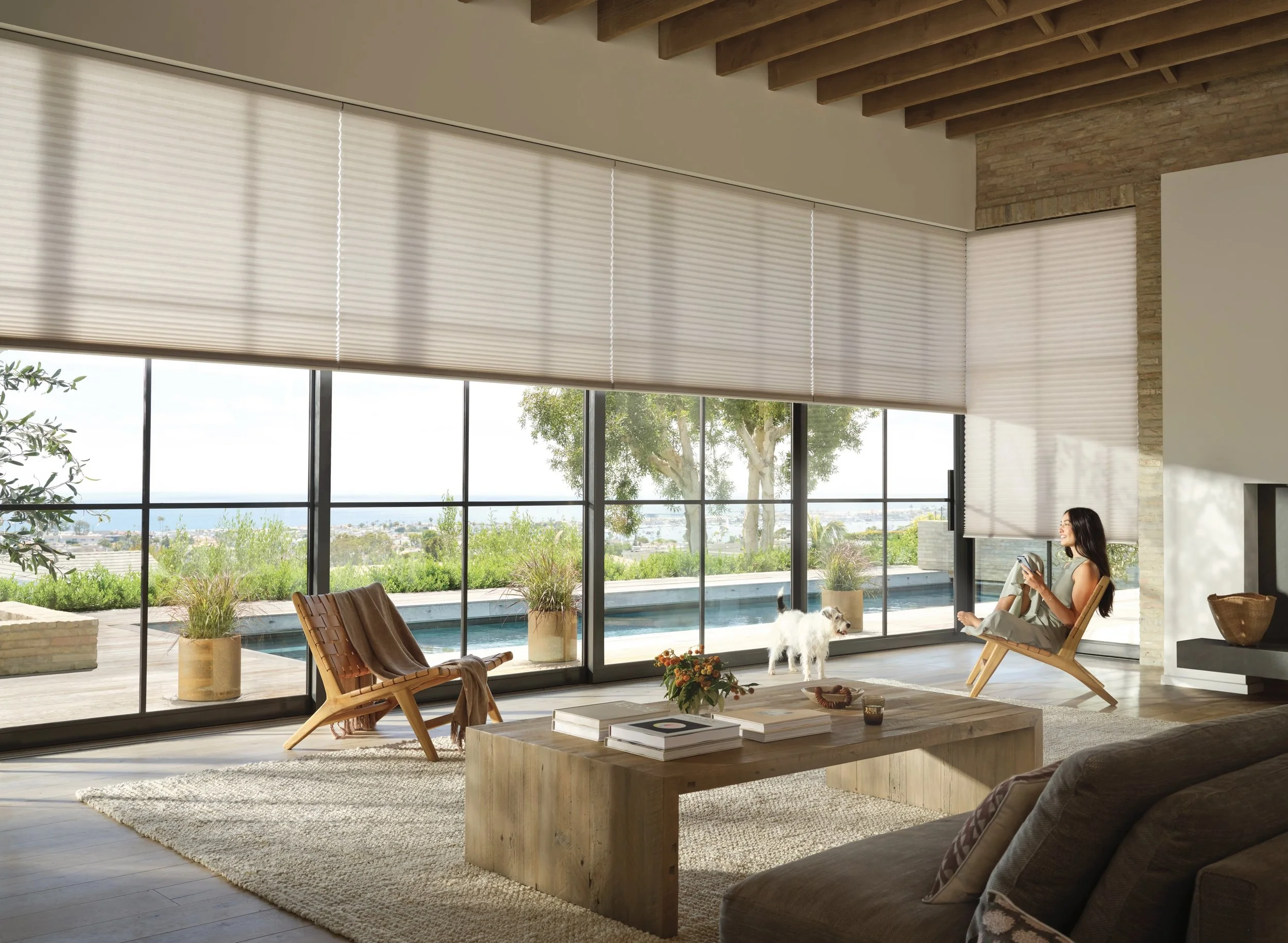
Hunter Douglas - Duette Honeycomb Shades
For more than 27 years, Marlys Wiegand has visited homes across the Portland metro area, Salem, and the Willamette Valley, watching how light moves through a space, evaluating fabric options in the room, and listening to what homeowners are really asking for (which is rarely just "curtains").
You deserve custom window treatments tailored to your specific home, light, and lifestyle, and that only happens when your designer has actually visited your home.
This guide walks you through exactly what an in-home consultation with Adrette looks like, what it reveals about your home, and why starting this process early leads to a finished home with, as Marlys puts it, only good surprises on installation day.
Curious what a visit would look like for your home? Schedule your complimentary Design Discovery Call or call Adrette at (503) 703-4692 to start the conversation. That brief call is our pressure-free first step before the in-home visit. In the meantime read on to learn how an in-home visit works!
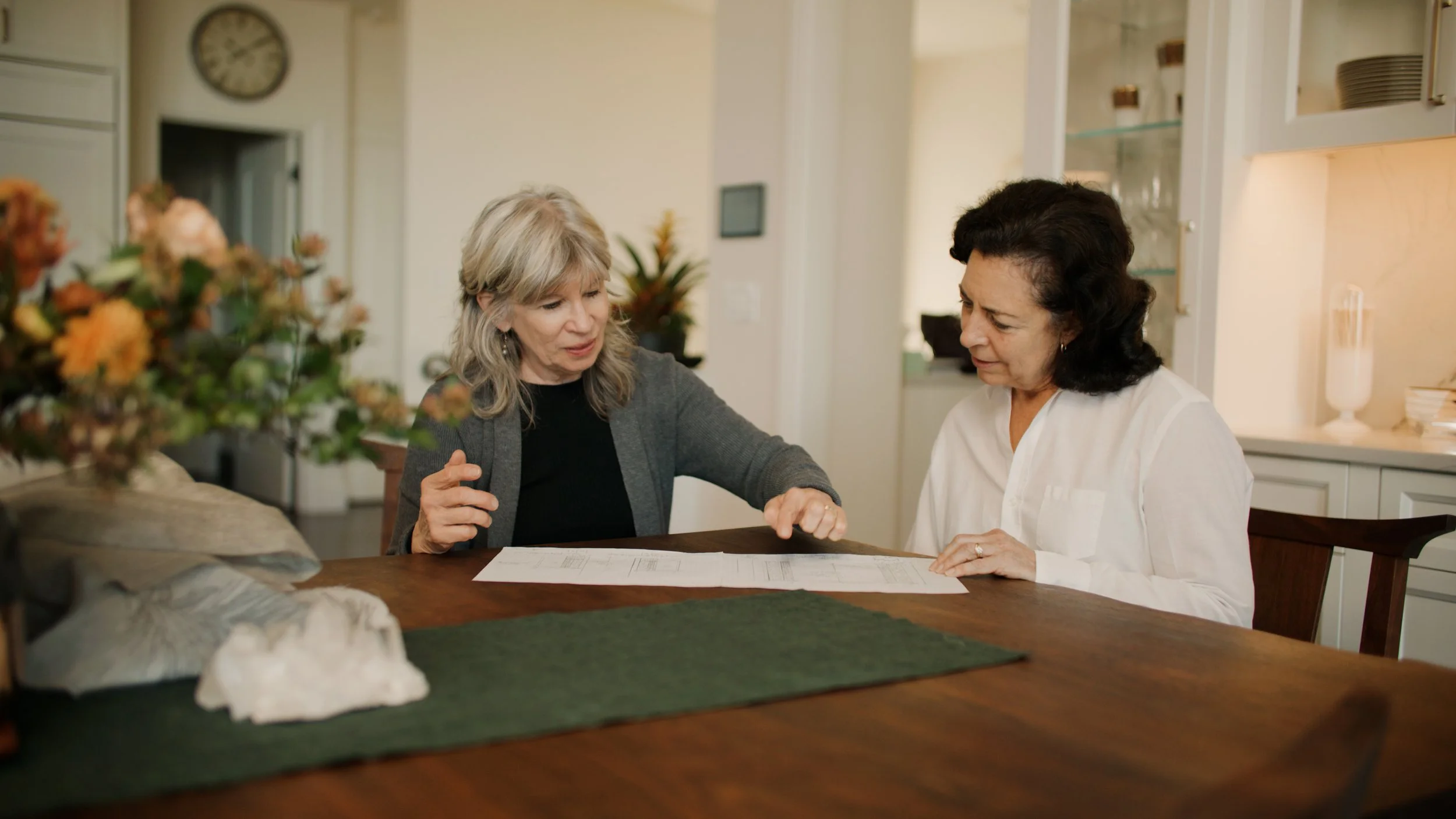
Joanna and Marlys discussing a design sketch and selecting fabrics
Designing in Real Light: The lessons gleaned from 27 Years of In-Home Consultations
As a founder and lead designer of Adrette Custom Window Coverings, Marlys Wiegand has been walking through the finest homes of Portland, Salem, the Willamette Valley, and beyond.
What she learned early on was that the homeowners happiest with their finished rooms were almost always the ones who had a designer visit their home, not just talk them through the options by phone or in a showroom.
At the end of the day, you simply can’t see how a fabric, texture, or color really looks until you see it in the light of your own home. You need to see how a design will interact with the rest of your decor. You need to be in your own space to envision how the final product will really look. Designing in the real light and look of your home is essential to bringing your dream window treatment design to life.
An in-home consultation is also a time when the relationship with your designer deepens. As you talk about the stories and inspirations behind your ideas, in your home, they began to truly capture your vision and understand what you’re trying to accomplish.
To Marlys, this in-home design moment is irreplaceable.
“The truth is, custom window treatment design is about more than choosing fabrics and colors. Window treatments put the final touches on your dream home’s interior design. This isn’t just a project. It’s an endeavor of the heart, and you need more from your designer than expertise. You need to know they care.”
That care shows up in small ways. For example, your designer might notice a kitchen window looking directly into a neighbor’s home and quietly raise the privacy question before you have to. They might notice that a wall of leaded glass windows are each a slightly different depth and know how to work with it rather than against it.
One recent project, a 1920s Portland bungalow design for a young family expecting their first child, shows what's possible when design starts with a real conversation in the actual room. We'll walk through that project in the case study below. It’s a transformation that simply wouldn’t be the same for homeowners who skip the in-home step of the design process.
Project Spotlight: A 1920s Portland Bungalow, Reimagined in an On-Site Visit
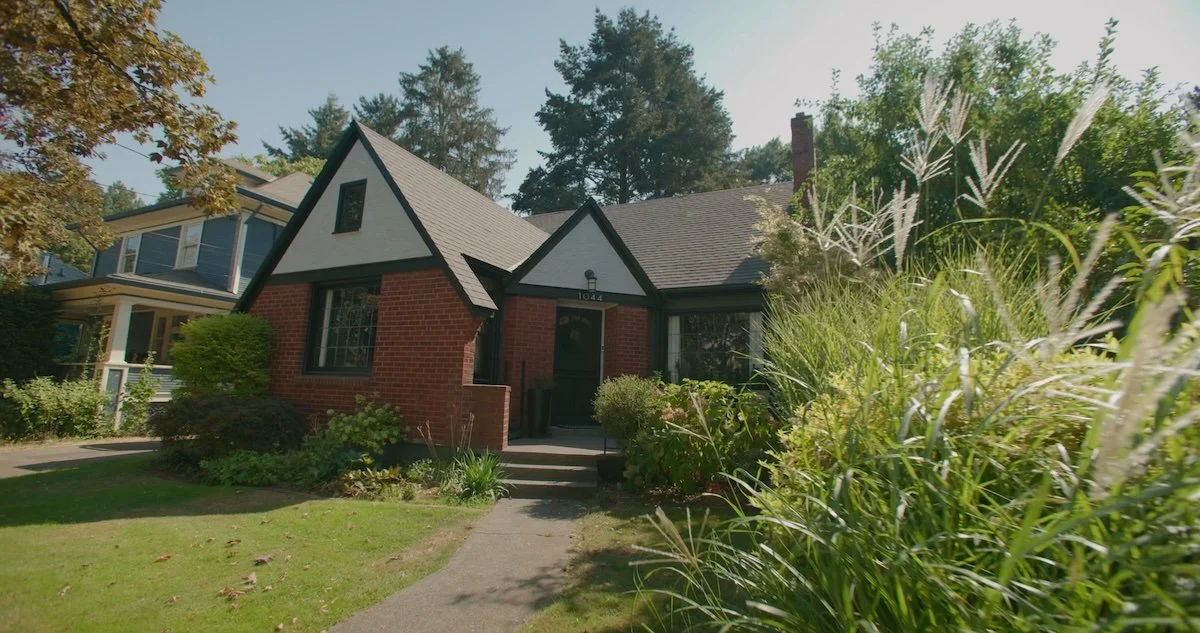
The Challenge
Justin and her husband were in the final phase of remodeling their 1920s Portland bungalow when their remodeling company's designer recommended Adrette. They needed help with three rooms, the living room, dining room, and kitchen. And this was a meaningful moment, with their first child on the way.
After months of remodeling, the three rooms still felt somewhat cold and unfinished to the homeowners. The couple wanted a cozy, romantic feel - even a little "royal.” However, the house had real architectural quirks. The original leaded glass windows were beautiful, yet each sat at a slightly different depth, with moldings varying window to window. Privacy was a concern in two directions: at the front, where windows faced the street and sidewalk directly, and in the kitchen, where a window looked straight into a neighbor's.
Adrette's Approach
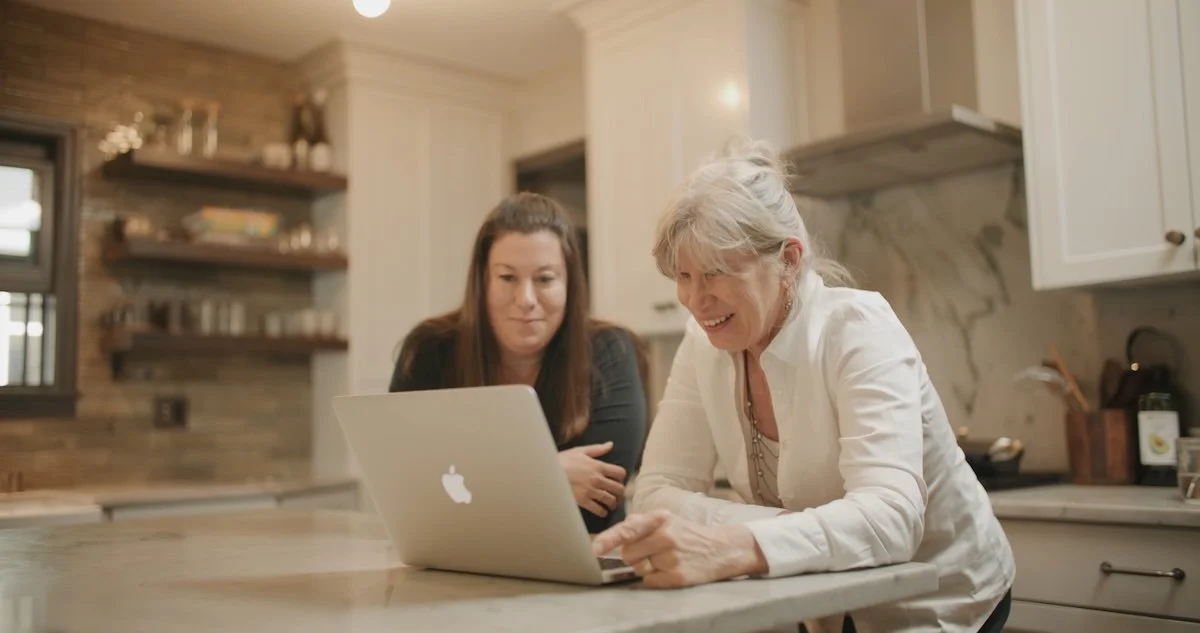
Justin and Marlys exploring window treatment solutions
During the on-site consultation, Marlys walked all three rooms with the couple, addressing each window's quirks individually rather than proposing a one-size-fits-all solution. She brought curated fabric and shade samples for them to see and feel in their own light.
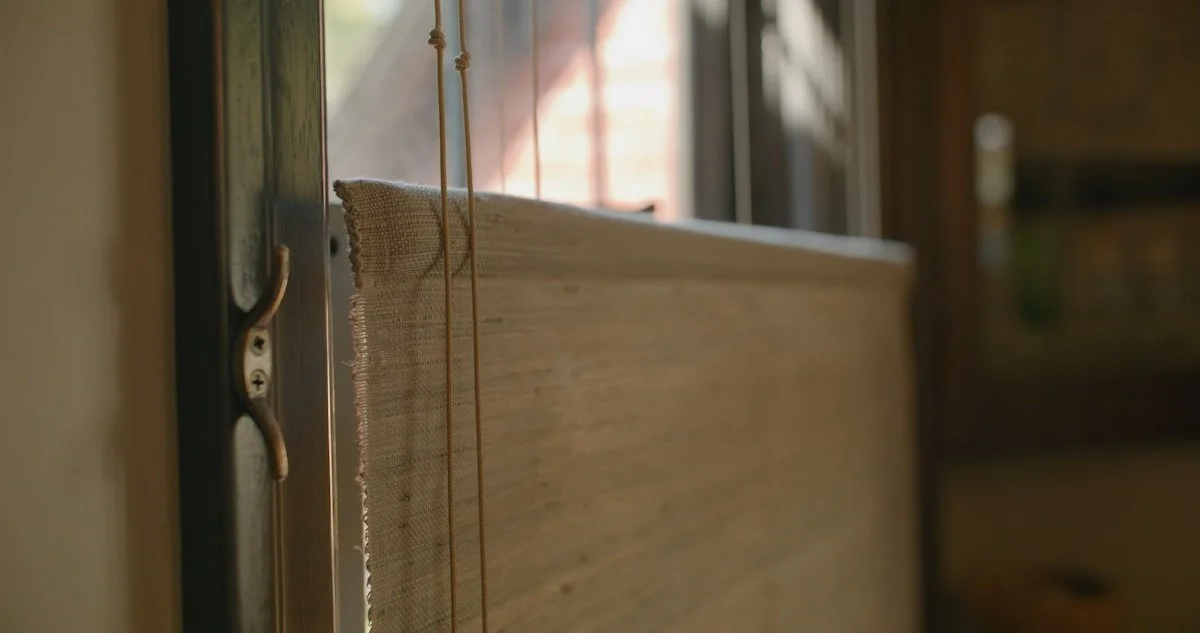
For the windows facing the street and the kitchen window facing the neighbor's house, Marlys recommended Conrad handwoven grass shades with a semi-sheer, light-filtering lining. They would provide genuine privacy from the street and next door while still showing the shade's rich texture from the inside.
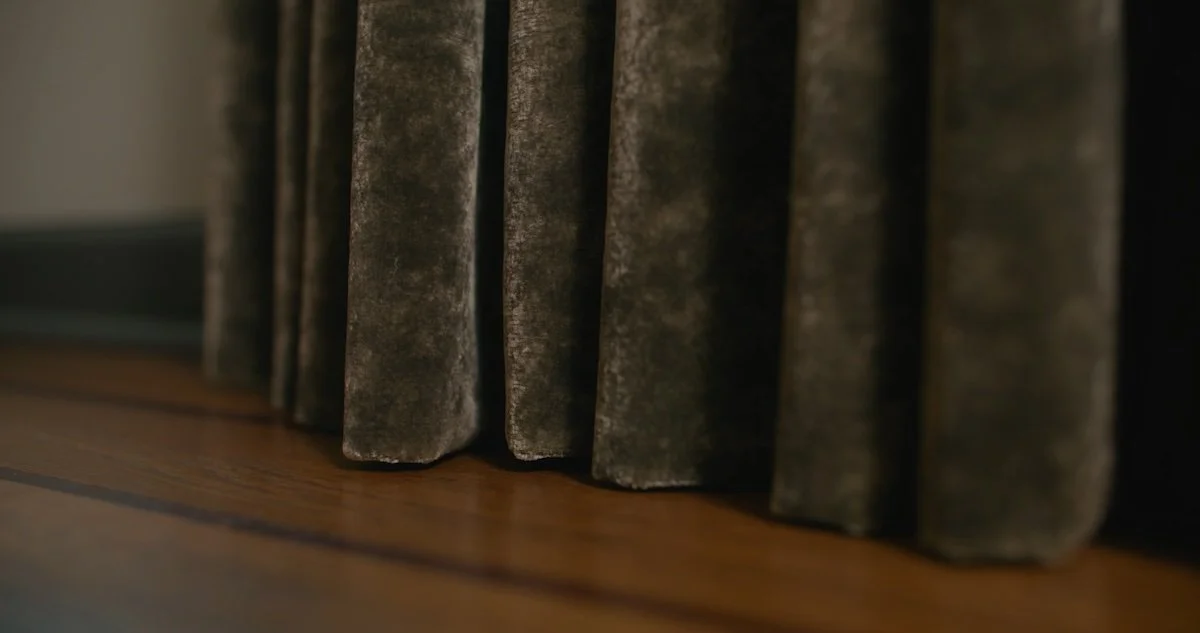
For the custom drapery, the couple chose an imported European velvet lined in cotton. This would deliver the "romantic, royal" feel they wanted. The drapery hardware was wrought-iron in an antique bronze finish, nodding to the home's 1920s character without feeling dated.
The Result
When the project was complete, the living room, dining room, and kitchen had transformed from "cold and unfinished" into warm, cozy, elegant spaces. It was exactly the "royal" feeling the couple had described at the start. The top-down/bottom-up grass shades gave privacy below while keeping views of the surrounding trees open above, or closed entirely when desired. The velvet drapery and antique bronze hardware tied each room together, giving the leaded glass windows a finished, intentional frame.
None of this would have been possible without the in-home design consultation, where designer and homeowner could align on the vision together.
You can see how it all came together in this short video.
In the couple's own words:
"Marlys was able to see beyond the studs and go with what my dream was. She was able to accommodate and make things happen. The vibe is exactly what we wanted. If you desire some nice, custom drapes, you go with Adrette."
To see more transformations like this one, browse Adrette's gallery of custom drapery and shade installations.
Inside Adrette's Signature Window Treatment Design Process
Adrette's in-home consultation is part of a larger, structured process designed to make sure that, by the time anything is ordered, both you and Marlys are confident it's the right fit.
1. Complimentary Design Discovery Call. This is your first conversation with Adrette, where you’ll describe your space, style, and goals, and discuss a general investment range. You can schedule that here!
2. On-Site Design Consultation. Marlys visits your home in person, walking each room with you to identify the right treatments and fabrics for your windows and light. Marlys even brings curated fabric and product samples to your home.
3. Measurement & Detailed Proposal. Adrette measures windows and doors and prepares a detailed proposal covering products, fabrics, hardware, and pricing.
4. Ordering. Once approved, Adrette orders from its trusted vendor network, including Hunter Douglas and Insolroll for quality blinds and shades.
5. Fabrication & Installation. Marlys oversees fabrication of draperies & Roman shades and is present at installation, confirming every detail matches the plan.
6. Follow-Up. A few weeks later, Adrette checks in to confirm everything is working and looking exactly as intended.
How long does it take? Most blinds and shades go from first call to finished installation in 4 to 6 weeks.
Custom drapery, Roman shades, and bespoke bedding take roughly 10 to 14 weeks, depending on fabric availability. That’s one more reason to plan early when you have a remodel, holiday family-gathering at your home, or move-in deadline in view.
What an In-Home Design Consultation Reveals About Your Home
No two homes, and no two windows or doors within the same home, are exactly alike. A consultation conducted by email or in a showroom works from averages and assumptions, but one conducted in your home works from reality. Here's what it typically reveals.
Reading Your Home's Architecture
Older Portland-area homes like craftsman bungalows and Tudor revivals are full of character and quirks a tape measure alone won't catch. Original leaded or beveled glass windows are often slightly different sizes, with moldings and casing depths varying window to window, even within the same room, so a treatment ordered to one "standard" measurement fits none of them well. Newer construction has its own version: deep casings, oversized openings, transoms, and proportions off-the-shelf sizing wasn't designed for.
During an in-home consultation, Marlys and her team measure every window individually: its width, height, depth, and trim condition. Then she decides, window by window, whether a treatment should be inside-mounted (tucked within the frame, preserving molding detail) or outside-mounted (extending beyond the frame for a larger appearance or to accommodate an uneven opening).
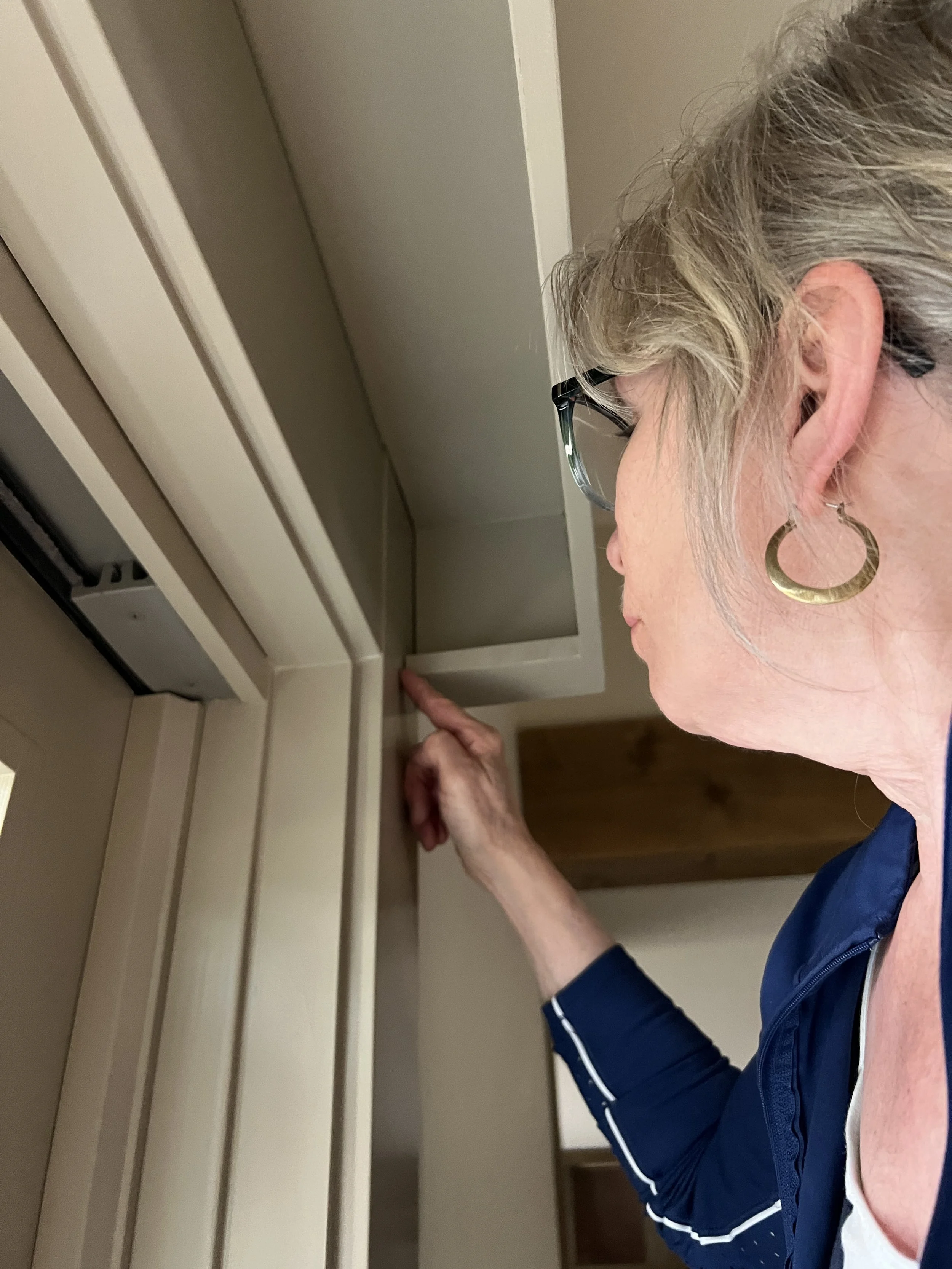
Marlys at an in-home consultation noticing all the details.
The Language of Light: Filtration, Fabric Weight & Lining
"Light-filtration" is an aspect of your window treatment design that shapes how a room feels at every hour of the day, and there are many options to choose from. When your designer sees the light at play in your home, they can recommend the best approach.
1. Sheer — Filters light softly while preserving views and openness; best where brightness matters more than privacy.
2. Light-filtering — Diffuses sunlight into a soft glow, reduces glare, and offers daytime privacy. Often right for living and dining rooms.
3. Room-darkening — Blocks most light, leaving a small glow at the edges. Common in primary bedrooms.
4. Blackout — Eliminates nearly all incoming light. Best for nurseries and media rooms.

Light-filtering draperies add privacy to this studio.
Fabric weight and lining are also part of the light-filtration formula. A lightweight linen sheer behaves nothing like a velvet fabric. Linings alter a window treatments’ function too. Cotton lining gives a drapery body. Blackout lining converts an elegant fabric into a true light blocker. A semi-sheer, light-filtering lining paired with a textural shade delivers privacy while letting its texture read beautifully from inside the home.
Configuration matters as well. For example, in the Portland bungalow, a top-down/bottom-up shade lowers from the top for light and views while keeping the bottom covered for privacy.
Pleat Styles, Hardware & Smart-Home Integration
The way a drapery panel hangs depends on its pleat style. Pinch pleats showcase a tailored, traditional look with structured folds. Updated pleat styles create a simpler look suited to minimalist interiors. Ripplefold creates soft, continuous waves and a clean, modern silhouette which is increasingly popular in contemporary Portland-area homes.
Hardware is where details compound. A wrought-iron rod in antique bronze reads warm and historic, well-suited to a Craftsman bungalow. Brushed nickel or matte black usually suits more contemporary spaces. Finishes should always relate to the home's existing door hardware, lighting, and plumbing fixtures, so treatments feel integrated rather than added on.
Motorization, too, has moved well beyond a luxury add-on. With Hunter Douglas PowerView Automation, window shades can be scheduled to open with morning light, close at sunset, or respond to voice commands. We can accomplish the same for Adrette’s custom draperies and shades and automate them with Somfy’s ultra-quiet motors.
Every one of these decisions is easier to get right in your home, in your light. Schedule your complimentary Design Discovery Call to discuss your project with Marlys, or call (503) 703-4692 to set a time.
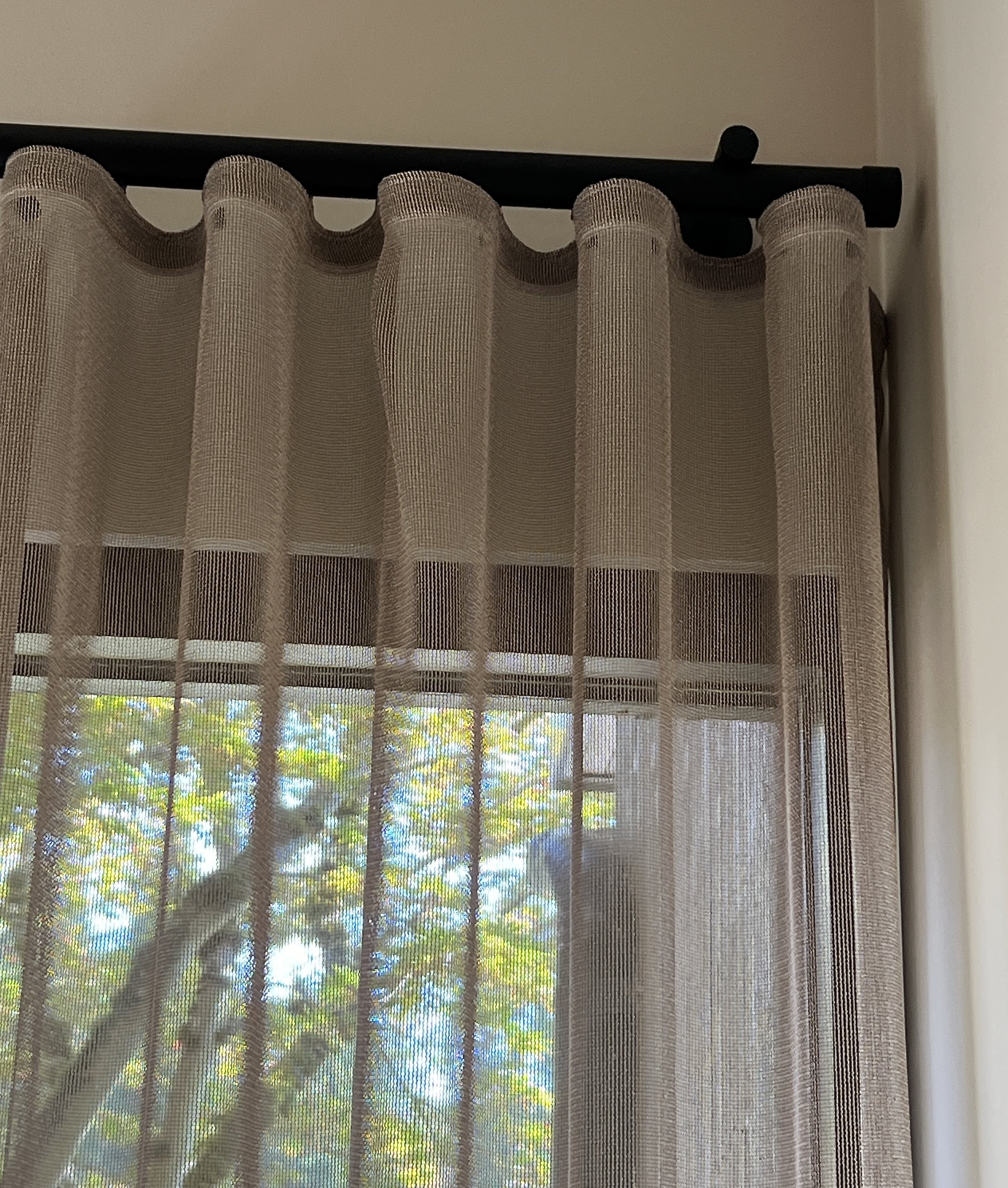
Custom Ripplefold drapery and metal hardware.
Why Timing Matters: Planning Before the Walls Close Up
Here's what many homeowners, builders, and remodelers don't realize: bespoke window treatments require far more planning than most people expect — and the best time to start is before the walls are closed.
During framing, while studs and headers are exposed, it's simple to add blocking or reinforced headers wherever heavier treatments will eventually mount. The same goes for motorization. Running wiring to each window opening during construction makes it easy and far cheaper to automate later. A wired opening can stay “unmotorized” indefinitely; doing either after drywall is up means slower, messier, costlier work.
This also intersects with safety: the Window Covering Manufacturers Association has long promoted cordless and motorized designs for homes with young children and pets — a consideration that mattered greatly to the young family in our case study below, who already had a dog and were expecting a baby.
For homeowners working with a builder, remodeler, or designer, Adrette regularly consults early with the trades — sometimes during the framing walkthrough itself, to flag these opportunities before walls are sealed.
Why Portland-Area Homeowners Trust Adrette
Experience and authority aren't abstractions in the window treatment industry. They show up in the stitching, the measurements, and the finished fit of every panel and shade.
Adrette has been West Linn's boutique custom window treatment studio since 1999, more than 27 years under the continuous direction of a single designer, Marlys Wiegand. Every drapery panel, Roman shade, and cushion that leaves Adrette's studio is handcrafted by North American artisans, using premium fabrics sourced from mills around the world.
As an authorized Hunter Douglas window fashion dealer, Adrette offers the full range of Hunter Douglas shading systems, including Silhouette shadings, Duette honeycomb shades, and PowerView motorization. We also offer interior and exterior Insolroll solar screen shades, manufactured in Colorado, for homes trying to balance daylight, view, and energy efficiency.
This combination of craftsmanship and process shows up in our testimonials and in our clients’ stories, all of which you can read on our website.
Schedule your complimentary Design Discovery Call or call Adrette at (503) 703-4692 — and discover the difference it makes when you know your designer cares. You’ll experience the white-glove process Adrette has provided to Portland and Salem’s finest homes for over 27 years.
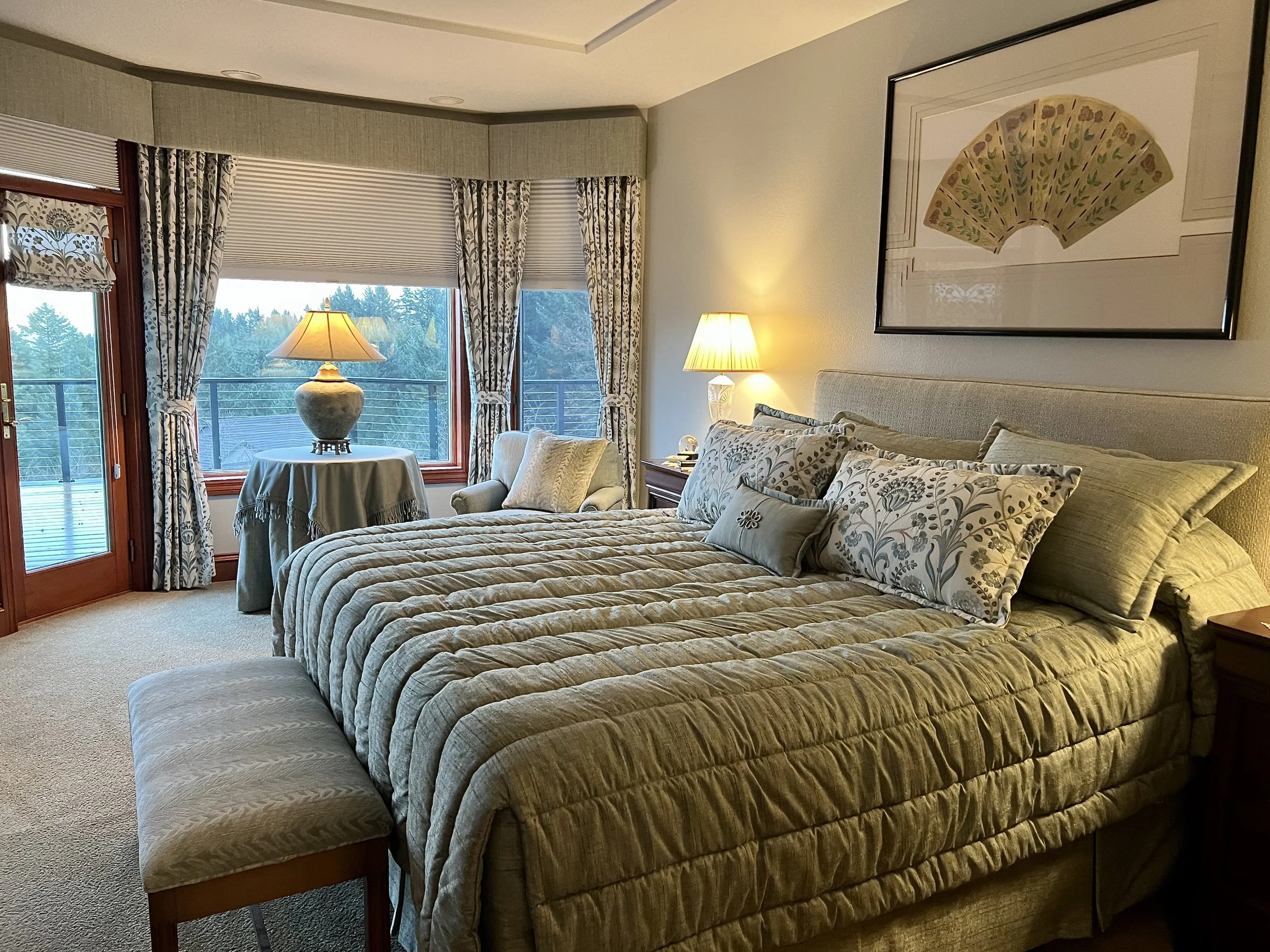
For Diane & Joe’s bedroom, Adrette crafted & installed custom drapery panels, cornices, a Roman shade, honeycomb shades, a coverlet and bed skirt, pillows, a table skirt, and a table topper. We also built & upholstered the new headboard and reupholstered the chair, ottoman, and bench.
Frequently Asked Questions
-
Your design process starts with a complimentary Design Discovery Call to talk through your space, style, and goals. That is the part of the process we offer for free. Then, if you agree to an in-home design consultation where Marlys visits your home, the in-home consultation comes at the cost of a retainer that applies toward your overall purchase.
-
Most blinds and shades are ready in 4 to 6 weeks from approval. Custom drapery, Roman shades, and bespoke bedding typically take 10 to 14 weeks, depending on fabric availability.
-
Ideally,
before or while walls are open. This allows structural reinforcement and wiring for future motorization, both far harder to add after drywall.
-
Light-filtering shades diffuse sunlight into a soft glow with daytime privacy. Room-darkening shades block most light, leaving a small glow at the edges. Blackout shades eliminate nearly all light — ideal for nurseries.
-
Yes. Adrette regularly consults with builders and remodelers, sometimes during the framing stage, to plan reinforcements and wiring before walls close.
-
No. The goal is to find the right solution for your windows and confirm Adrette is the right fit, with no pressure to commit on the spot.
-
Adrette serves West Linn (its home-base), Portland, Lake Oswego, Beaverton, Wilsonville, Sherwood, Tigard, Happy Valley, Salem, McMinnville, Corvallis, Eugene, and the Willamette Valley.
Whether you're in the early stages of a remodel, putting the finishing touches on a new build, or simply ready for custom window treatments that finally feel like yours, the conversation starts the same way.
Schedule your complimentary Design Discovery Call or call Adrette at (503) 703-4692 — and discover why, on installation day, the only surprises are good ones.
About the Author
Marlys Wiegand is a co-founder and the lead designer of Adrette Custom Window Coverings in West Linn, Oregon. For more than 27 years, she and her team have created handcrafted custom drapery, shades, blinds, shutters, and motorized window treatments for design-conscious homeowners throughout Portland metro, Salem, the Willamette Valley, and beyond. As an authorized Hunter Douglas Window Fashion dealer, Marlys combines old-world artisan craftsmanship with modern smart-home technology. She works directly with each client through Adrette's in-home design consultation process, which begins with a complimentary Design Discovery Call.